Your trainees are passing their quizzes. Attendance is great. Everyone seems comfortable with the material.
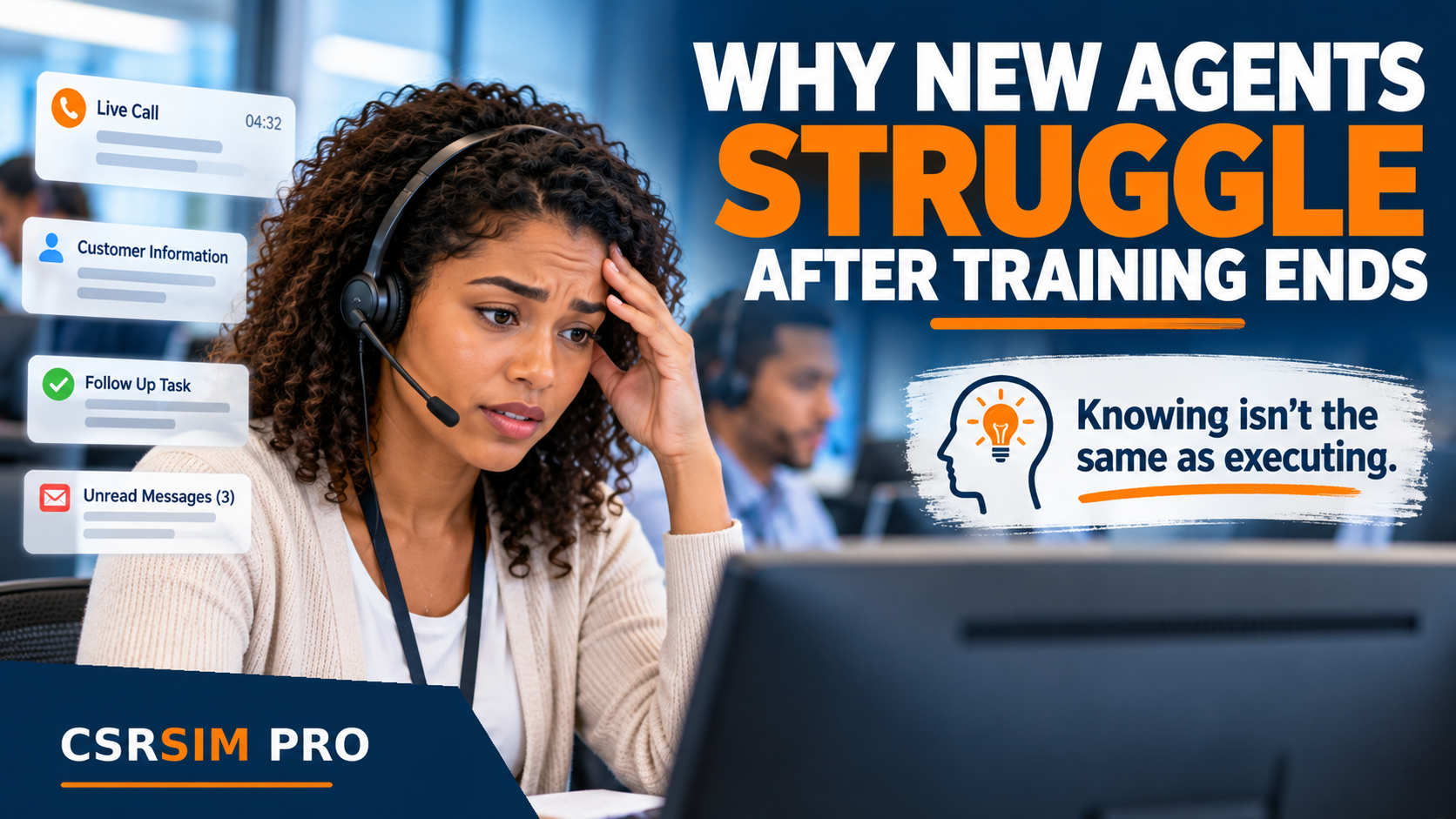
So why do some of those same agents struggle once they begin taking live customer calls?
The answer may have less to do with what they know and more to do with how well they can apply it.
Classroom performance and production performance aren’t always the same thing.
Fortunately, many readiness gaps can be identified before new agents begin working with actual customers.
Here are five warning signs trainers should pay attention to.
1. They Constantly Ask Their Supervisor What to Do Next
Questions are a normal part of learning, especially when a situation requires judgment or escalation.
However, repeated requests for help with routine, previously trained workflows may indicate that trainees haven’t developed independent problem-solving skills.
For example, an agent may understand a policy but still ask their supervisor where to locate it or how to apply it.
What to practice:
Create scenarios requiring trainees to use approved resources before requesting assistance.
Ask them to explain where they found the information and why it applies to the customer situation.
The objective isn’t to eliminate questions. It’s to strengthen independent handling of tasks within the agent’s authority.
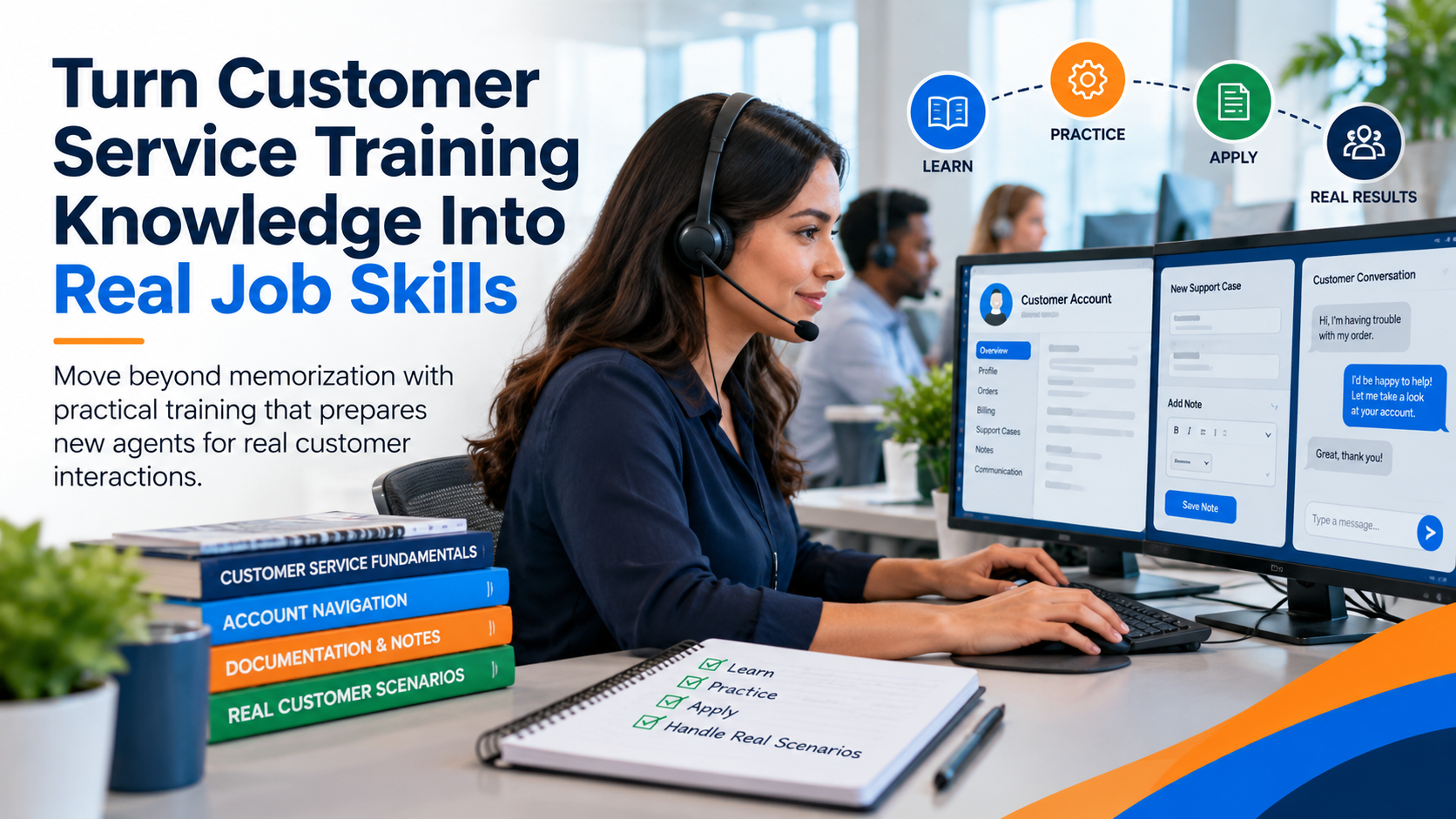
2. They Struggle to Navigate Customer Accounts
An agent may understand what information is needed but spend excessive time searching for it.
This becomes especially challenging when they’re simultaneously listening to the customer, navigating multiple screens, and documenting information.
What to practice:
Create account navigation exercises with specific objectives.
For example, ask the trainee to locate a fictional customer’s most recent interaction, identify the current account status, and determine which information is relevant to the request.
Observe their search process.
Are they moving through the correct screens? Do they know where information is stored? Can they distinguish relevant details from unnecessary information?
3. They Miss Important Verification Steps
Verification is often taught early in onboarding, but knowing the requirements doesn’t guarantee consistent execution.
During a realistic conversation, trainees may become distracted by the customer’s urgency or frustration.
They might begin discussing protected account information before completing the required verification process.
What to practice:
Create scenarios involving incomplete or unsuccessful customer verification.
Require trainees to follow approved procedures and explain the next steps professionally.
Use a verification checklist during evaluations to identify missed requirements.
4. Their Call Documentation Is Incomplete or Unclear
An agent might successfully handle a customer request but leave behind notes that don’t explain what happened.
Incomplete documentation can create confusion for the next employee reviewing the account.
What to practice:
After each mock call, require trainees to document the interaction.
Evaluate whether the notes accurately describe the customer’s concern, actions completed, resolution, and any required follow-up.
Ask another trainer or trainee to review the notes and determine whether they could understand the interaction without additional explanation.
5. They Struggle With Multi-Step Customer Requests
Simple calls often follow a familiar pattern.
More complicated calls require agents to gather information, interpret account details, complete several tasks, and confirm the final outcome.
A trainee who performs well in straightforward scenarios may struggle when multiple steps are involved.
What to practice:
Build scenarios that require more than one action.
For example, a customer requests an account update, has a question about a previous transaction, and needs confirmation of the next steps.
Evaluate whether the trainee organizes the request, completes the appropriate actions, and communicates a clear resolution.
What Should Trainers Do When These Signs Appear?
The answer isn’t necessarily another full training session.
First, determine which skill is breaking down.
Then create a focused exercise that gives the trainee another opportunity to perform that skill correctly.
A navigation problem needs navigation practice. A documentation problem needs documentation exercises. A decision-making problem needs scenarios requiring research and judgment.
This is why structured practice and consistent scoring are valuable.
They help trainers move from general feedback such as “needs improvement” to specific, actionable coaching.
Catch the Gaps Before Production
The best time to identify these warning signs is before an employee begins handling live customer interactions.
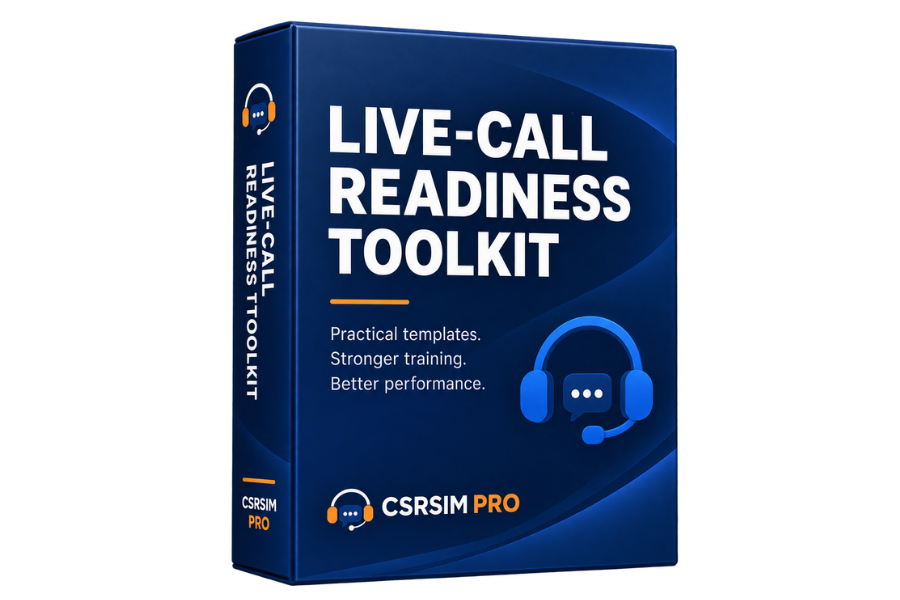
The CSRSIM PRO Live-Call Readiness Toolkit gives trainers reusable mock call templates, a customer verification checklist, account navigation exercises, a documentation quality checklist, and a trainer scoring sheet.
These tools help turn common readiness concerns into practice activities with clear expectations.
Get the Live-Call Readiness Toolkit and start identifying the skills your trainees need to strengthen before their first live call.