“I think they’re ready.”
It’s a statement that can sound reassuring at the end of a new-hire training class.
But what exactly makes an agent ready?
Is it attendance? Passing scores? Completing the LMS curriculum? A successful role-play conversation?
Each of these can tell trainers something useful. However, none automatically confirms that the trainee can independently handle the workflows required in production.
When readiness decisions rely heavily on impressions, important performance gaps can be overlooked.
A more effective approach is to replace assumptions with observable evidence.
Start by Defining What “Ready” Actually Means
Before evaluating new agents, trainers need a clear definition of successful performance.
That definition should reflect the actual responsibilities employees will perform.
For a customer service agent, readiness might involve demonstrating the ability to:
- Verify customer information correctly.
- Navigate the required account systems.
- Locate and interpret relevant procedures.
- Identify an appropriate resolution.
- Complete approved account actions.
- Document the interaction accurately.
- Recognize situations requiring escalation.
These aren’t just topics employees should understand.
They’re behaviors employees should demonstrate.
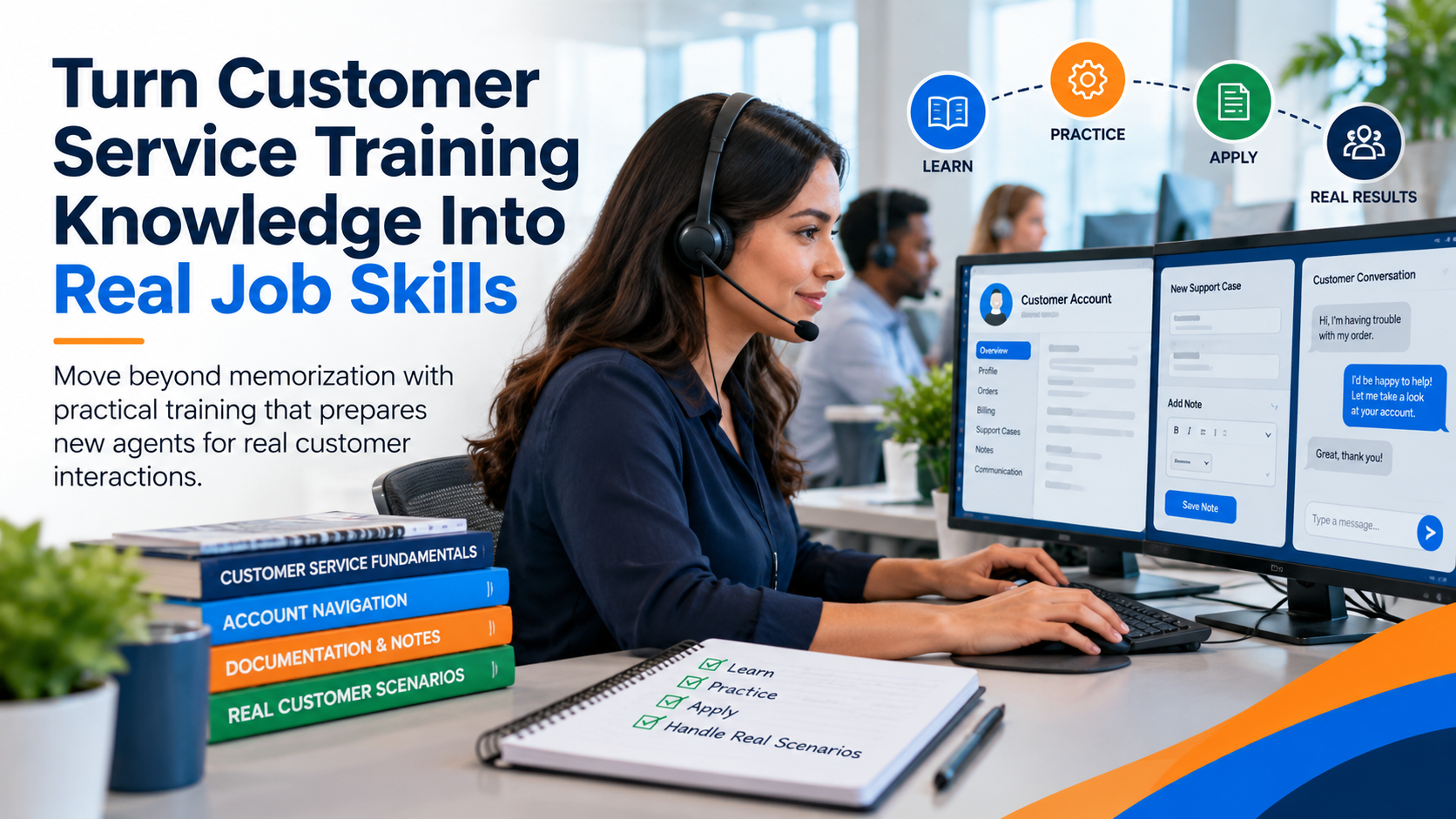
For example, instead of asking whether a trainee understands the account navigation process, ask them to locate specific information in a fictional customer account.
Now there’s something concrete to observe and evaluate.
Build Assessments Around Real Customer Workflows
A useful readiness assessment should resemble the responsibilities employees will perform.
Imagine this training scenario:
A customer calls because their account shows an unresolved request. They believe the matter was already addressed during a previous interaction.
The trainee must verify the customer, review the account history, locate the relevant information, determine the correct next action, and explain the outcome.
During the exercise, the trainer can observe whether the trainee:
- Followed the required verification process.
- Navigated to the correct account records.
- Interpreted the account history accurately.
- Selected an appropriate action.
- Documented the interaction.
This provides a much stronger basis for evaluating readiness than asking the trainee to describe the procedure from memory.
Use Consistent Scoring Criteria
One trainer may focus heavily on communication skills.
Another may focus on resolution accuracy.
A third may prioritize compliance and documentation.
All are important, but inconsistent evaluation standards can make it difficult to compare performance fairly.
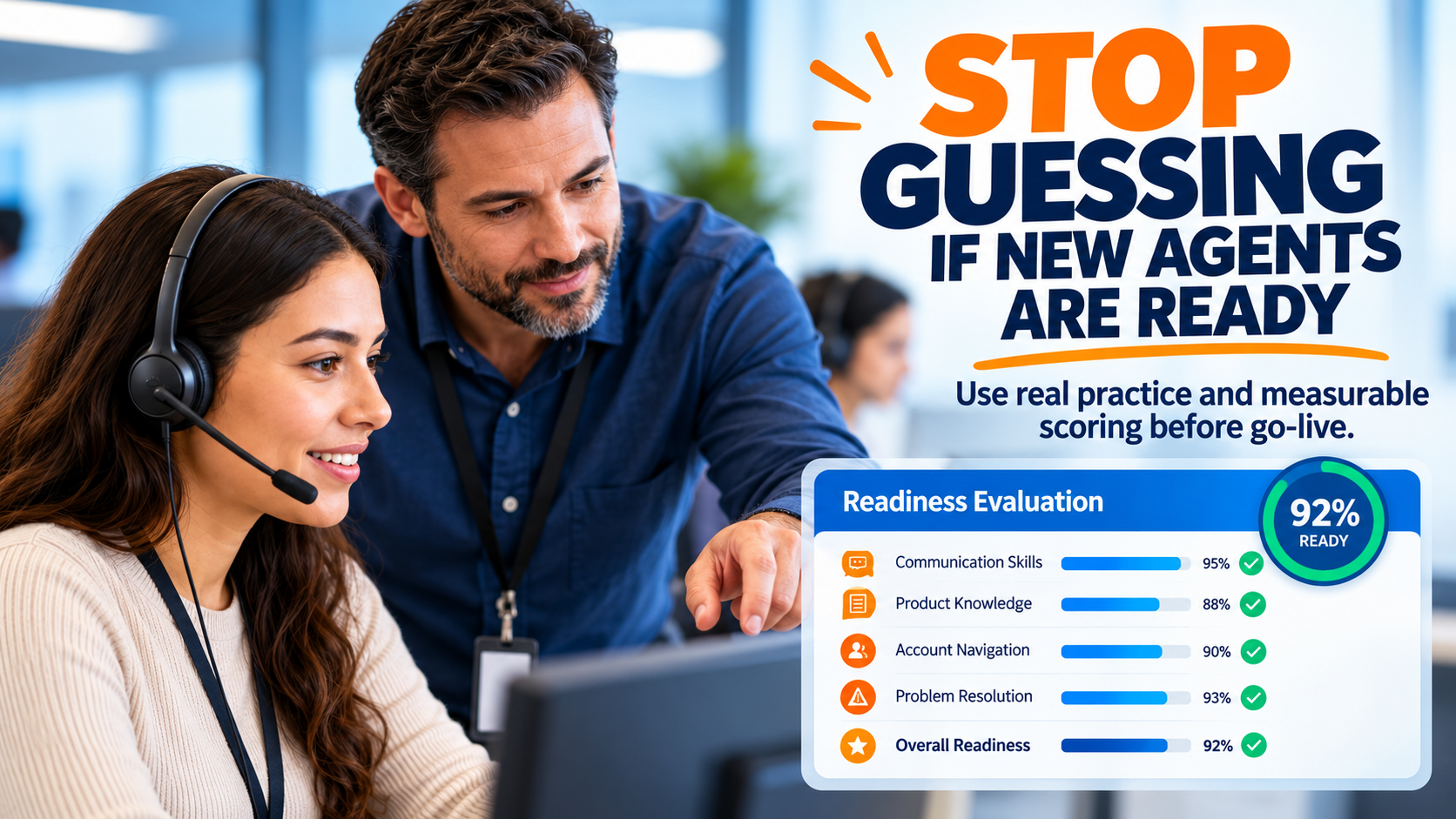
A structured scoring sheet helps establish common expectations.
Consider evaluating trainees across categories such as verification, navigation, decision-making, workflow execution, documentation, and resolution accuracy.
Critical requirements should also be identified separately. An employee shouldn’t be considered ready for a protected workflow simply because strong communication scores offset a serious verification error.
The objective is a more consistent and defensible readiness decision.
Training complete isn’t the same as production ready.
Give trainees a realistic customer scenario, observe the required actions, and score the skills that matter before go-live.

Stop guessing. Start measuring what agents can do.
The Trainer Scoring Sheet helps you evaluate communication, verification, account navigation, decision-making, workflow execution, documentation, and other critical skills using consistent standards.
Explore the Live-Call Readiness Toolkit →Measure Independence Without Discouraging Appropriate Escalation
Production readiness doesn’t mean employees must know every answer.
It means they can handle expected responsibilities, find approved resources, recognize their limits, and escalate appropriately.
During practice, distinguish between routine assistance and situations that legitimately require supervisor involvement.
For example, needing approval for a restricted account action is not the same as repeatedly asking where to locate information covered in training.
Both may involve reaching out to someone, but they demonstrate very different levels of readiness.
Turn Assessment Results Into Targeted Practice
What happens when a trainee doesn’t meet the expected standard?
The assessment should reveal where they need additional support.
If the problem is documentation, assign a documentation exercise.
If the problem is navigating multiple account screens, assign a targeted navigation challenge.
If the problem is resolving complicated requests, provide scenarios requiring multiple decisions and account actions.
After coaching, evaluate the skill again using a comparable scenario.
This approach turns assessment into a useful training tool rather than simply a pass-or-fail event.
Readiness Should Be Demonstrated, Not Assumed
The goal isn’t to make the onboarding process more complicated.
It’s to make readiness decisions clearer and give trainers a practical way to identify skills that need additional development.
You don’t need to build an entire new training program to begin.
Start with one realistic scenario, define the required actions, and create a scoring method that evaluates what the trainee actually does.
The Live-Call Readiness Toolkit from CSRSIM PRO provides mock call templates, a structured trainer scoring sheet, and practice resources to help you implement this approach.
Explore the Live-Call Readiness Toolkit and start making production-readiness decisions based on demonstrated performance rather than guesswork.