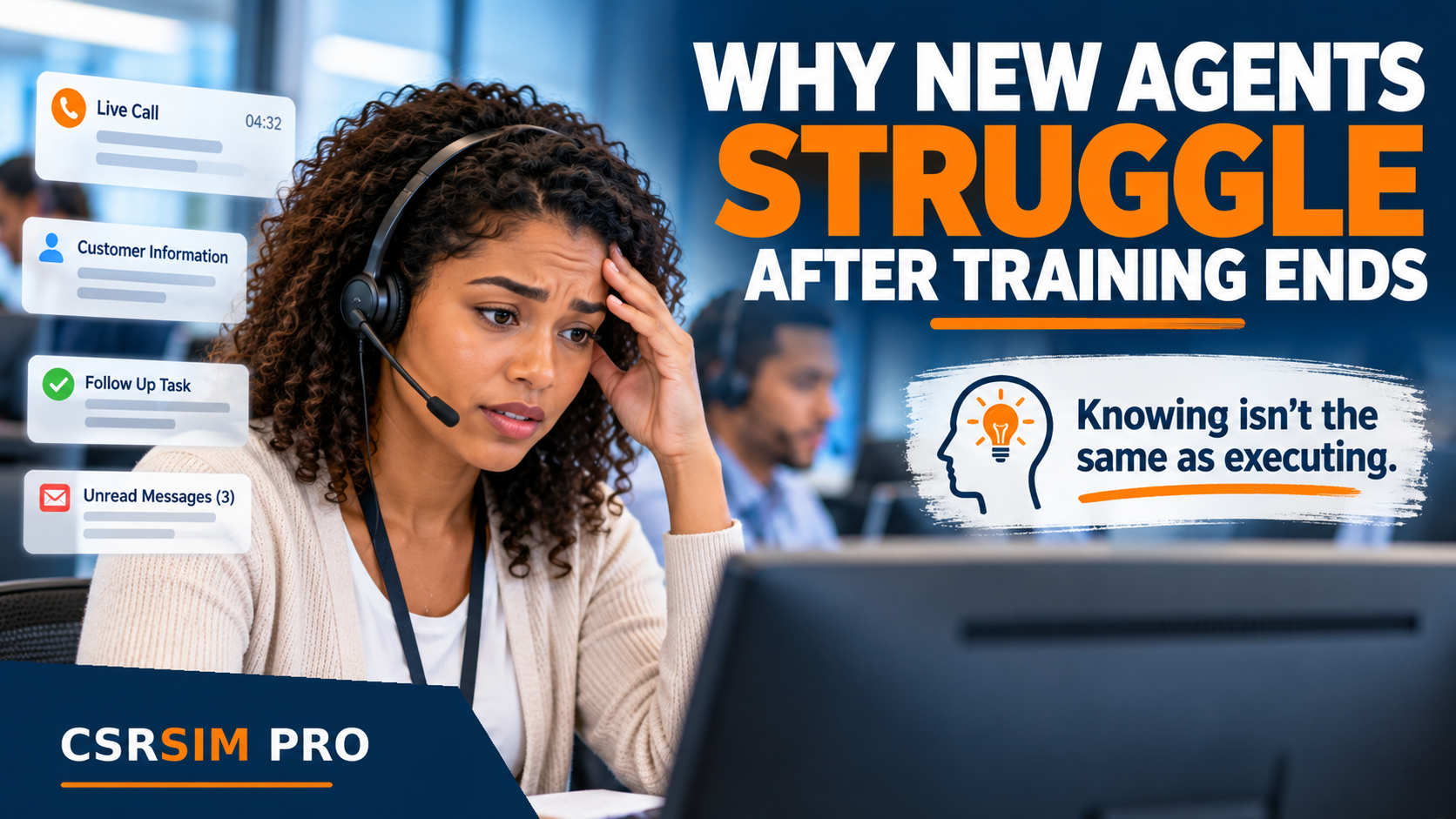
There’s a point in customer service training where knowing what to do is no longer enough.
The trainee has learned the procedures, reviewed the scripts, completed the required modules, and passed the assessments.
The next expectation is that they can apply everything while interacting with a customer.
But something important may be missing between those two stages.
Realistic practice.
Not another presentation.
Not another knowledge quiz.
And not simply repeating a scripted conversation with a partner.
A structured opportunity to execute the workflow before handling a live account.
Information Doesn’t Automatically Become Skill
Imagine teaching someone how to navigate a CRM system.
You explain the menus, account fields, search functions, and documentation requirements.
Then you demonstrate the process while the trainee watches.
The trainee may understand everything you’ve shown.
Now imagine asking that same trainee to find a specific account record while listening to a frustrated customer describe an unrelated issue.
That task requires more than recognizing information.
The trainee must decide what matters, find the appropriate resource, navigate the account, and determine the next action.
These are connected skills.
And connected skills need connected practice.
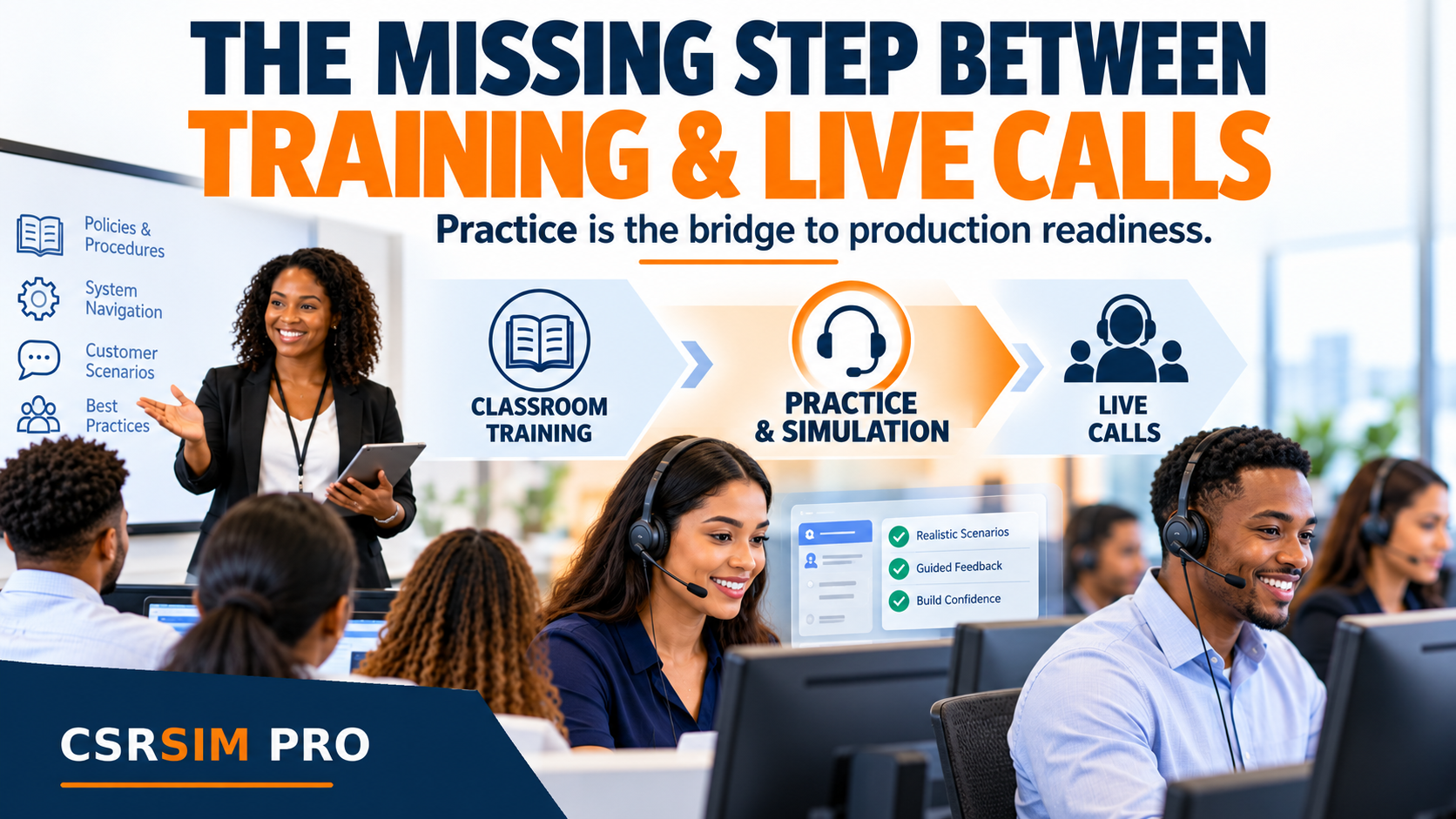
Introduce the Practice Stage
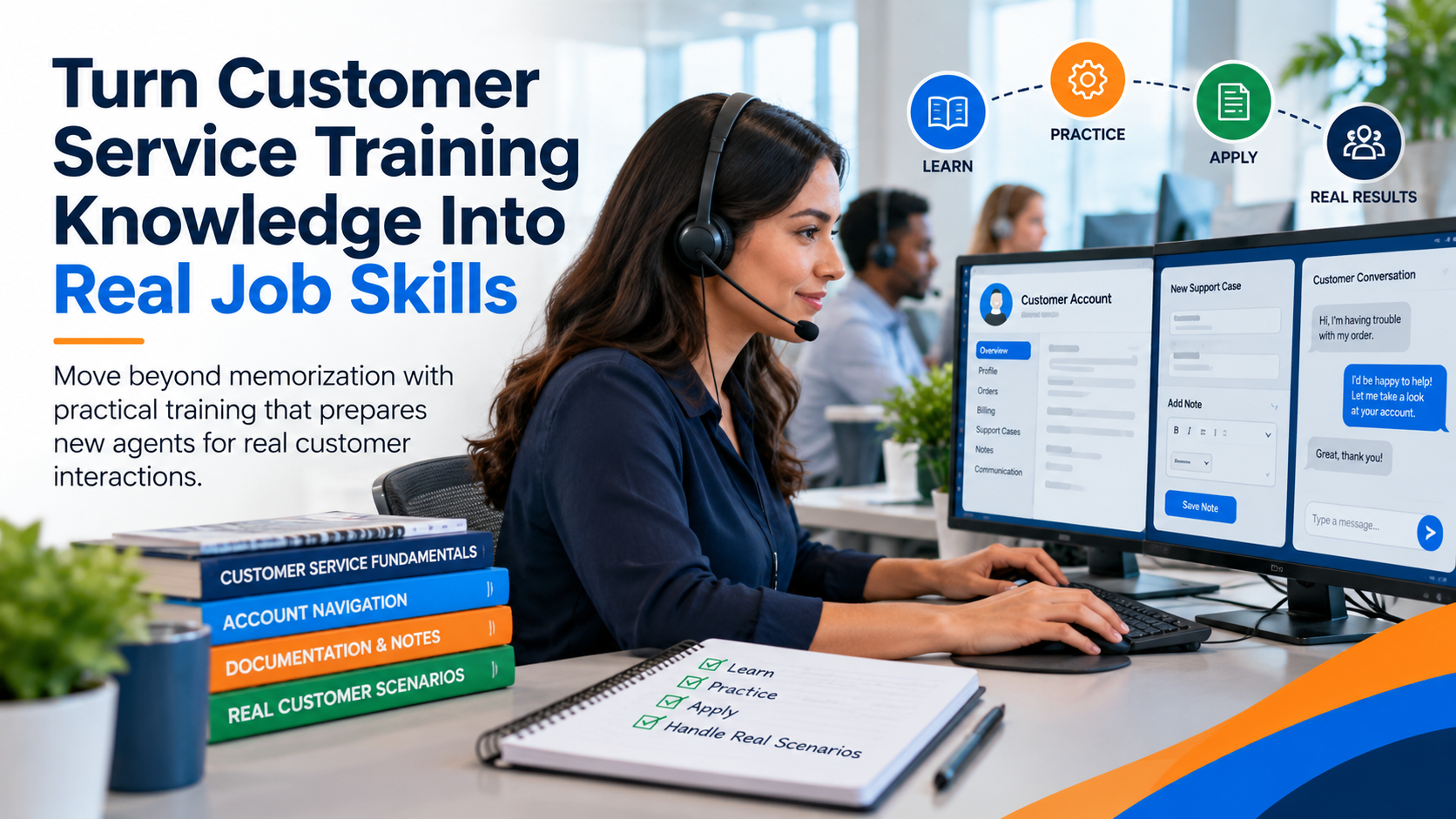
A useful customer service training structure includes three stages.
Stage 1: Learn
Teach the foundational information employees need.
This includes policies, procedures, customer communication expectations, account systems, and workflow requirements.
Stage 2: Practice
Give trainees realistic exercises requiring them to use the information.
They should locate accounts, interpret customer requests, research policies, complete tasks, and document outcomes.
Stage 3: Perform
Evaluate whether trainees can execute the required workflow with the appropriate level of independence.
When these stages are deliberately connected, trainers can identify problems before employees begin working live customer interactions.
What Does Realistic Practice Look Like?
Consider a mock call involving a customer who wants to know why a previously requested account update hasn’t been completed.
A basic role-play might focus on how professionally the trainee responds.
A more complete exercise asks the trainee to:
- Verify the customer’s identity.
- Locate the fictional customer account.
- Review the previous interaction.
- Identify the status of the requested update.
- Follow the approved procedure for the next action.
- Explain the outcome and any required follow-up.
- Document the interaction accurately.
Now the trainee isn’t just practicing what to say.
They’re practicing the complete job.
Make Training Mistakes Useful
A practice environment gives employees room to make errors, receive feedback, and try again.
If a trainee overlooks an account detail, the trainer can explain how that information affects the decision.
If the trainee chooses the wrong action, the trainer can review the applicable procedure.
If documentation is incomplete, the trainee can revise it.
These corrections are valuable because they happen before a real customer account is involved.
You Can Build the Practice Stage Without Starting Over
You don’t need to replace every existing training module.
Start with one procedure your agents frequently struggle to perform.
Create a fictional customer situation involving that procedure.
Define the required actions, provide the materials needed to complete the task, and establish the criteria for successful performance.
Then repeat the process for other important workflows.
Over time, your training library can grow from a collection of lessons into a collection of practical exercises.
The Bridge Between Knowing and Doing
The purpose of realistic practice is simple:
Give trainees an opportunity to apply what they’ve learned before they’re expected to perform independently.
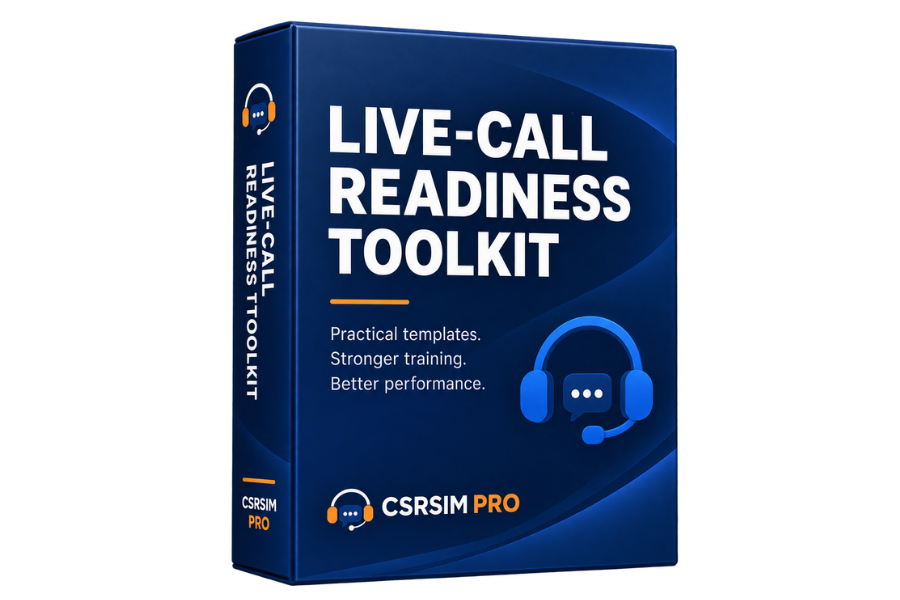
The CSRSIM PRO Live-Call Readiness Toolkit was designed to help trainers structure that practice.
With mock call scenario templates, customer verification and documentation checklists, account navigation exercises, and trainer scoring resources, you can begin converting existing lessons into more purposeful training activities.
Explore the Live-Call Readiness Toolkit and start building the practical bridge between classroom knowledge and live-call execution.