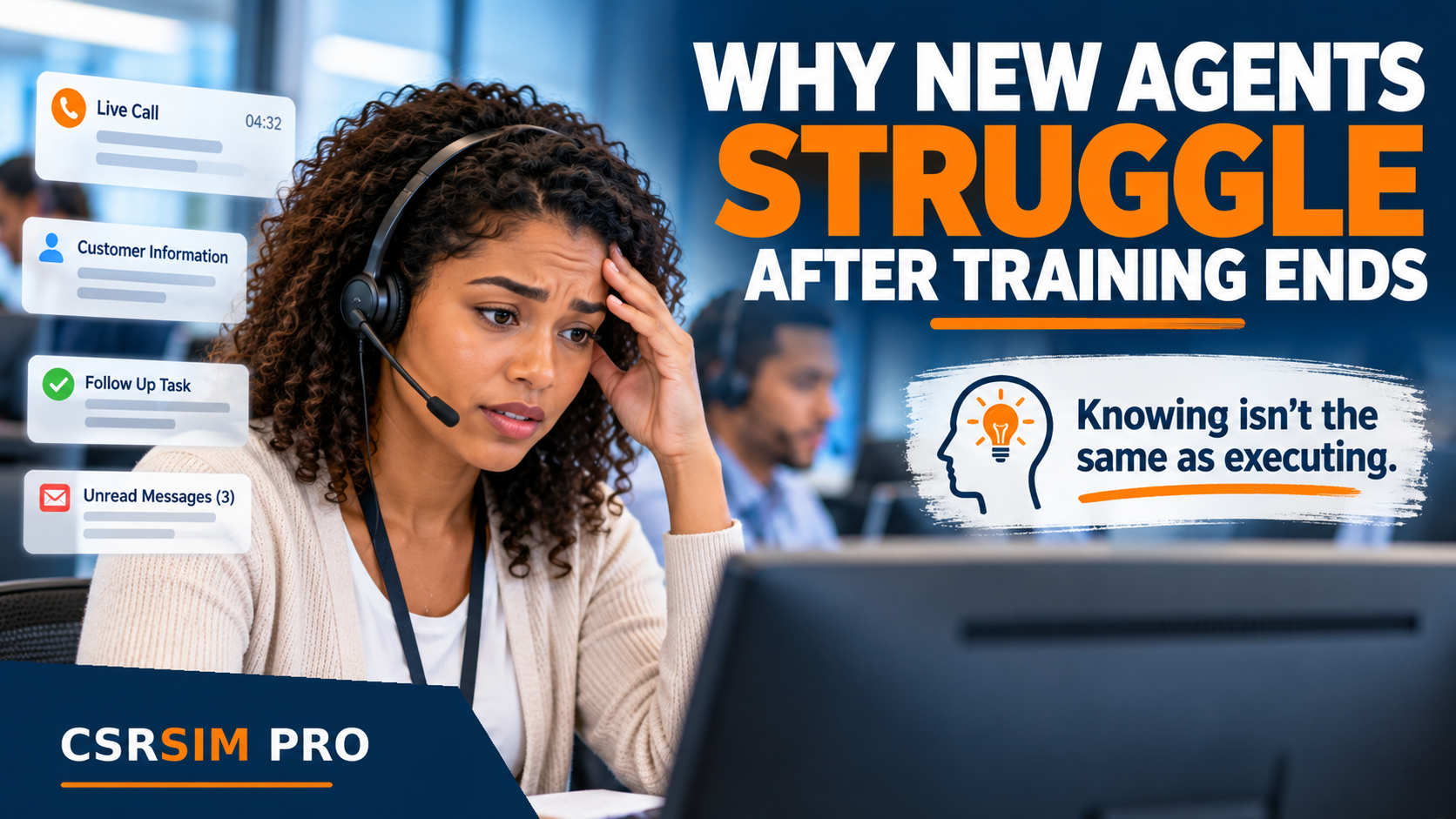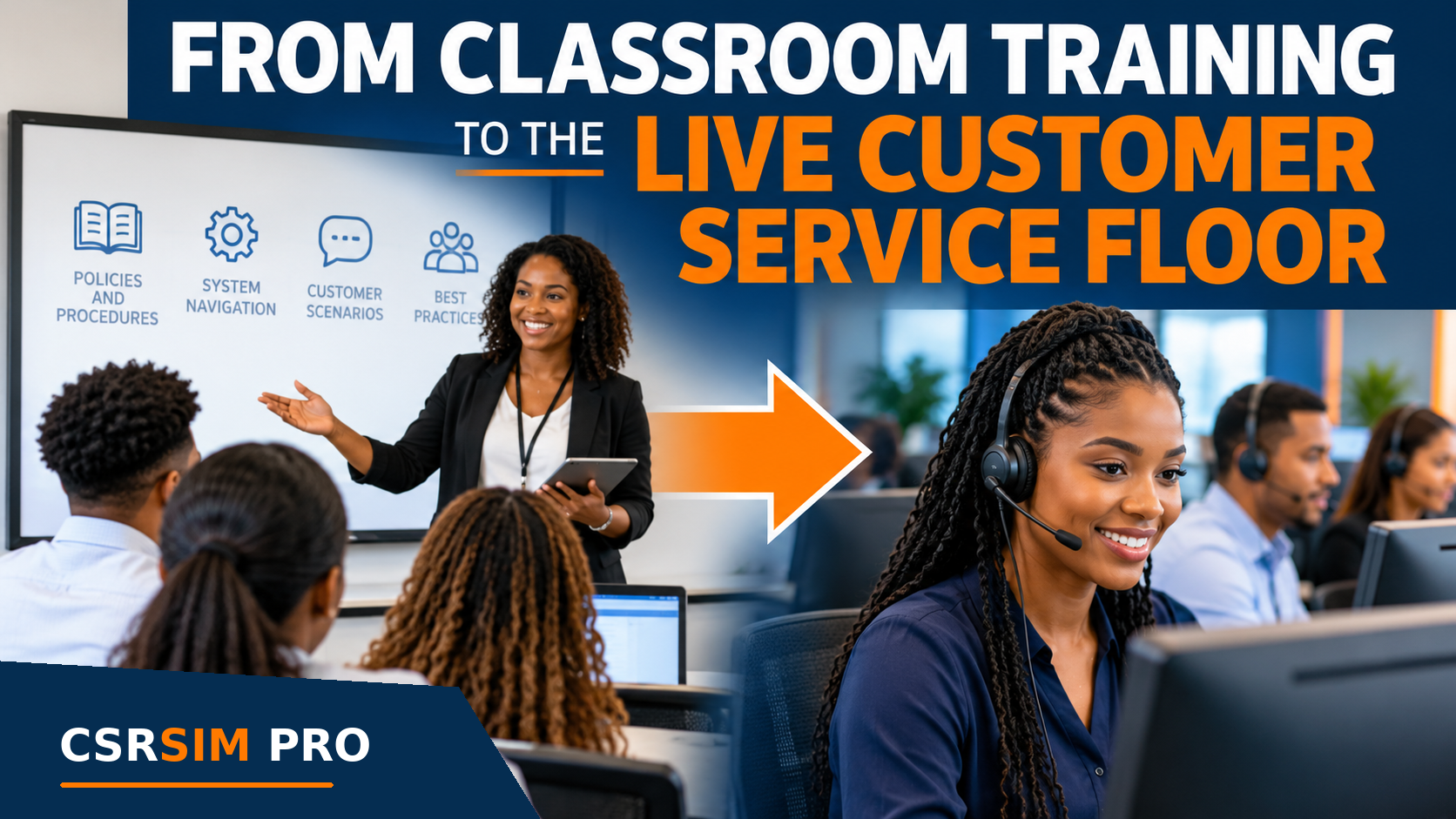
The classroom is controlled. The production floor isn’t.
During training, information is usually presented in a logical order.
The instructor explains the process. Trainees follow along. Examples are often clear, and the correct answers can be found in the materials provided.
Then the new agent enters production.
Suddenly, the information doesn’t arrive in the same sequence.
The customer begins explaining a problem before the agent has located the account. Multiple systems may be involved. Important details are missing. The agent must listen, research, make decisions, and document the interaction while keeping the conversation moving.
This transition can expose a weakness in the onboarding process.
The agent learned the information but hasn’t had enough experience using it under realistic conditions.
The Problem Isn’t Always the Classroom Content
Customer service training often includes important foundational material:
Policies. Procedures. Scripts. Compliance requirements. System demonstrations. Customer communication expectations.
All of these have a purpose.
The problem arises when trainees are expected to move directly from learning the material to executing complete customer workflows.
Consider a common training sequence.
A trainer explains how to locate account information. The trainee watches a demonstration. The trainer asks questions to confirm understanding.
The trainee responds correctly.
But has the trainee actually completed the task without assistance?
That’s an entirely different test.
Add a Practical Application Stage
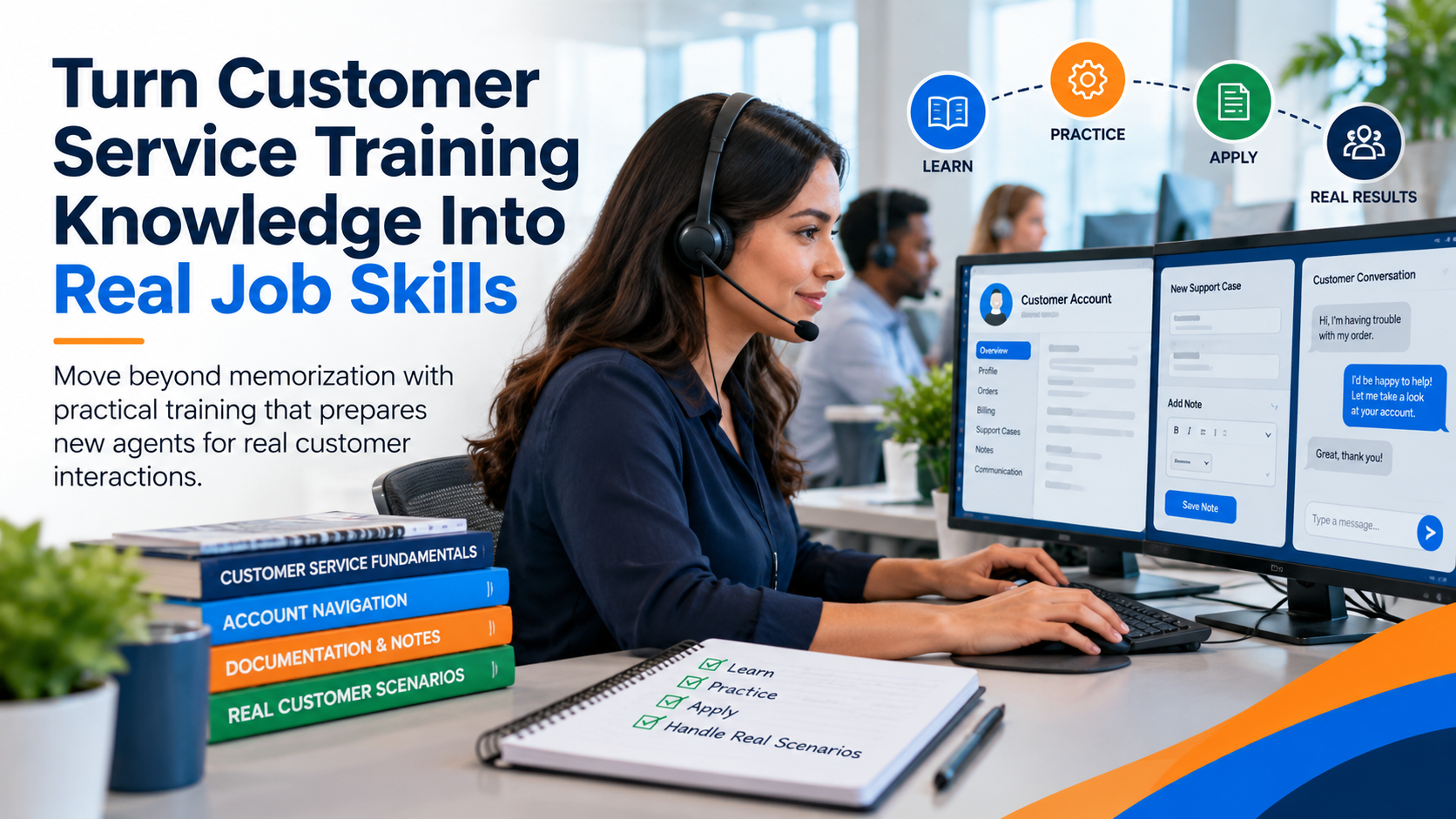
Between learning a procedure and using it in production, create opportunities for trainees to perform the procedure.
For example, after teaching the customer verification policy, present a fictional customer who provides incomplete identifying information.
Ask the trainee to determine how to proceed.
After demonstrating CRM navigation, give the trainee a customer request that requires locating information across multiple account tabs.
After teaching documentation requirements, have the trainee write notes based on a completed mock interaction.
These exercises allow employees to move from recognizing the correct answer to performing the correct action.
Make Practice More Realistic as Training Progresses
Not every training exercise needs to be complicated.
Begin with guided practice that focuses on one skill.
Then gradually introduce more demanding situations.
Stage 1: Guided execution
The trainee completes a task with step-by-step instructions.
Stage 2: Independent execution
The trainee completes the same type of task without detailed prompts.
Stage 3: Scenario-based execution
The trainee applies the skill within a realistic customer interaction.
Stage 4: Combined workflow execution
The trainee manages a scenario requiring several connected actions.
This progression gives trainers opportunities to identify weaknesses before the trainee encounters similar challenges with live customers.
Evaluate What Happens During the Workflow
When trainees complete a mock interaction, don’t evaluate only the final answer.
Look at how they reached it.
Did they select the correct account?
Did they follow the required verification process?
Did they use an approved resource?
Did they complete each required action?
Did they document the outcome?
A correct final answer can sometimes hide an incorrect process.
By observing the actual workflow, trainers can identify behaviors that require coaching.
Connect Practice to the Production Environment
Training exercises should reflect the systems, procedures, and responsibilities employees will encounter.
If agents will regularly use a knowledge base, their practice should include knowledge-base searches.
If agents must manage multiple account screens, practice should require navigation across those screens.
If documentation is mandatory, it should be part of the exercise rather than something discussed separately.
The closer the exercise reflects the real workflow, the more relevant the practice becomes.
Build a Stronger Transition With Structured Training Tools
Creating hands-on training doesn’t require abandoning your current learning materials.
Start with the procedures you already teach and turn them into realistic practice tasks.
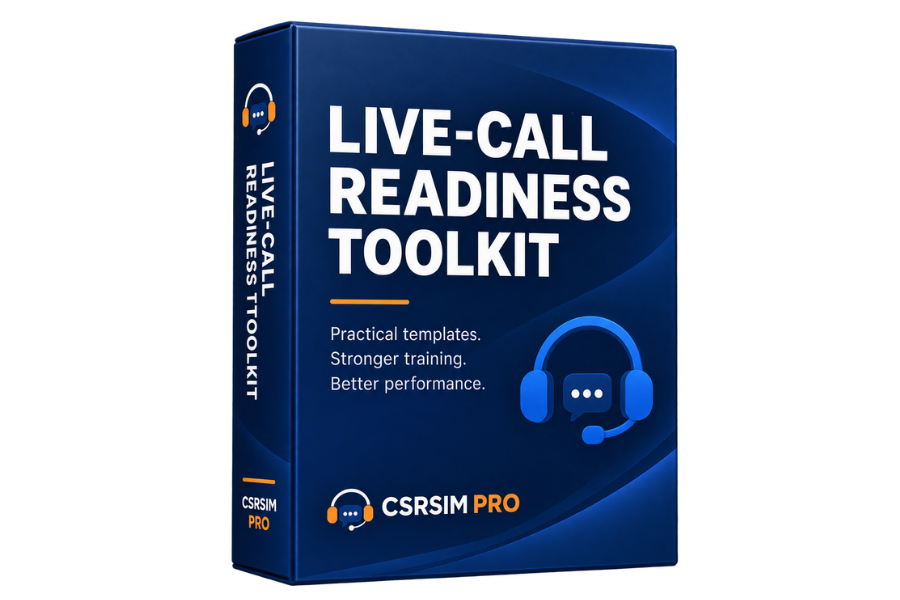
The CSRSIM PRO Live-Call Readiness Toolkit helps trainers make that transition with reusable mock call scenario templates, account navigation practice activities, documentation checklists, and trainee scoring tools.
These resources provide a structure for building the practice stage that classroom instruction alone may not provide.
Get the Live-Call Readiness Toolkit and turn more of your classroom lessons into skills your agents can demonstrate before entering production.