Category: Uncategorized
-
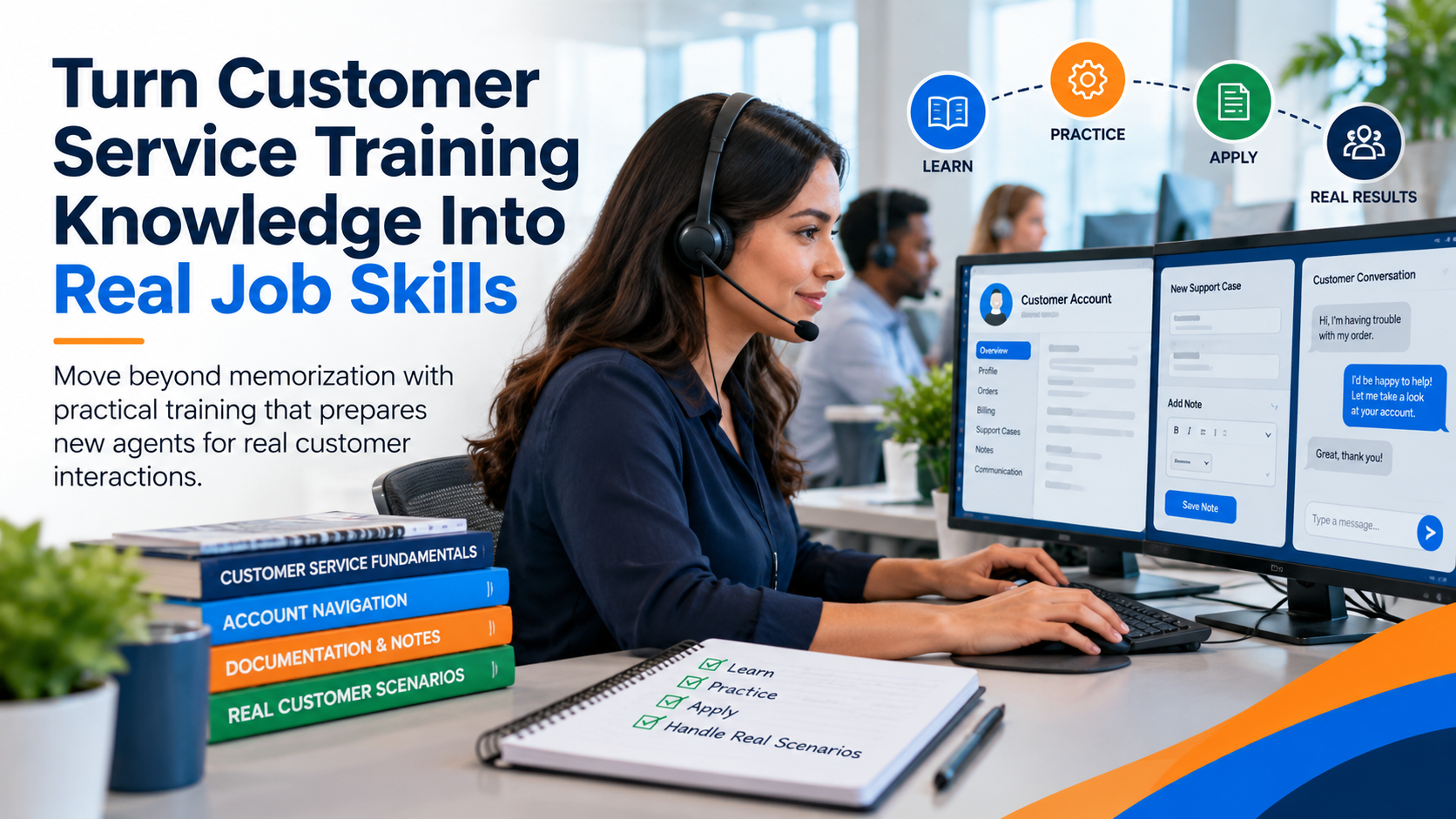
Turn Customer Service Training Knowledge Into Real Job Skills
Your employees don’t need to know more just for the sake of knowing more. They need to be able to use what they’ve learned. That’s where customer service training can become more effective. Most onboarding programs already contain valuable information. There are policies to follow, procedures to understand, systems to navigate, and customer communication standards…
-

How to Prepare Customer Service Agents for the Nesting Phase
The nesting phase should reinforce new agents’ skills, not become the first time they try to put everything together. Nesting is an important transition between formal training and independent production. It gives new agents an opportunity to handle live interactions with additional supervision, coaching, and support. But what happens when employees enter nesting without enough…
-
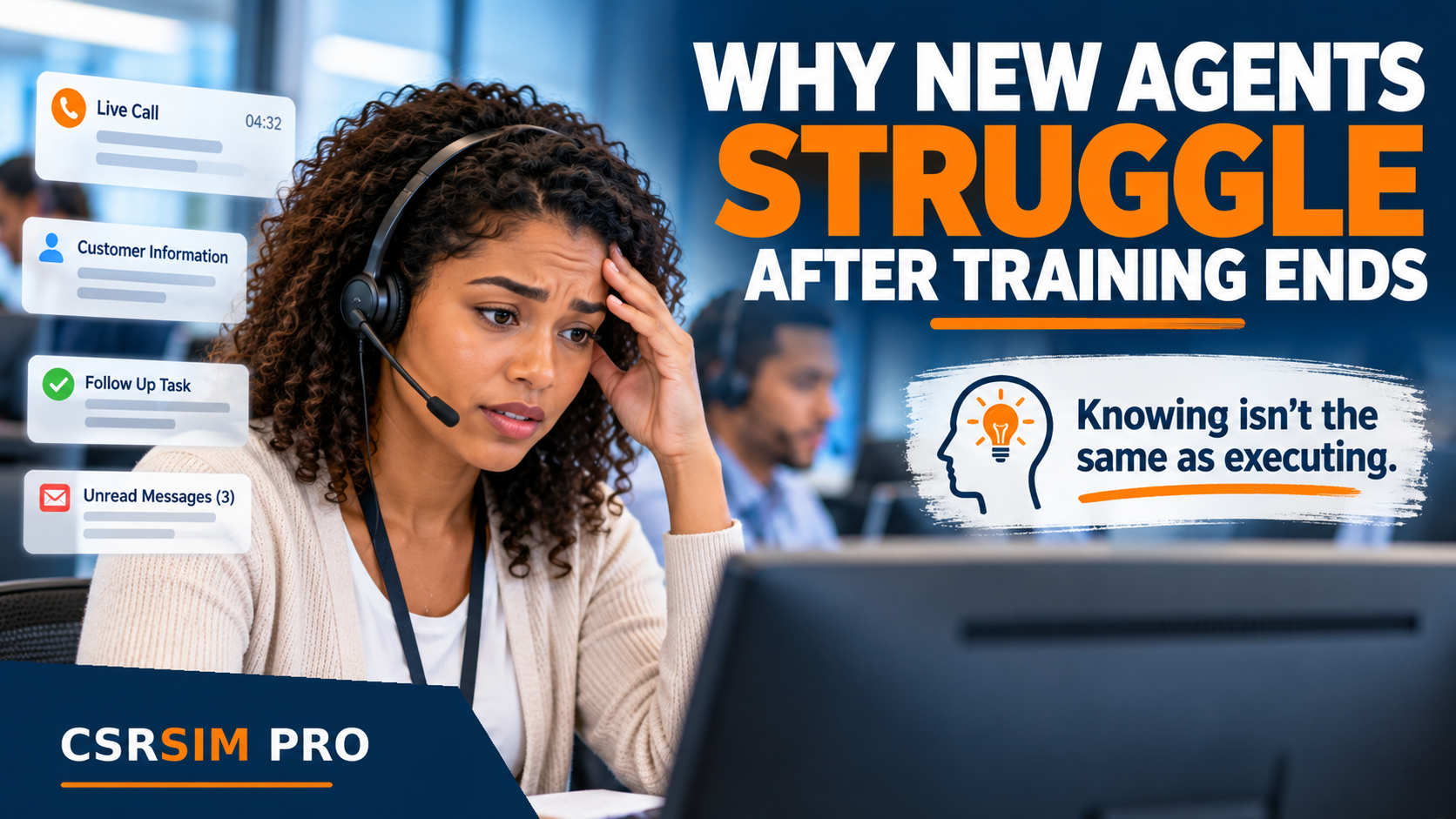
Why New Agents Struggle After Customer Service Training Ends
Your training program covered the material. Your new hires understood the procedures. Their assessment scores looked good. But a few weeks into production, the same problems keep appearing. Agents are taking longer than expected to navigate accounts. Supervisors are answering repeated questions. Call notes are missing important information. Some customer requests require unnecessary follow-up because…
-
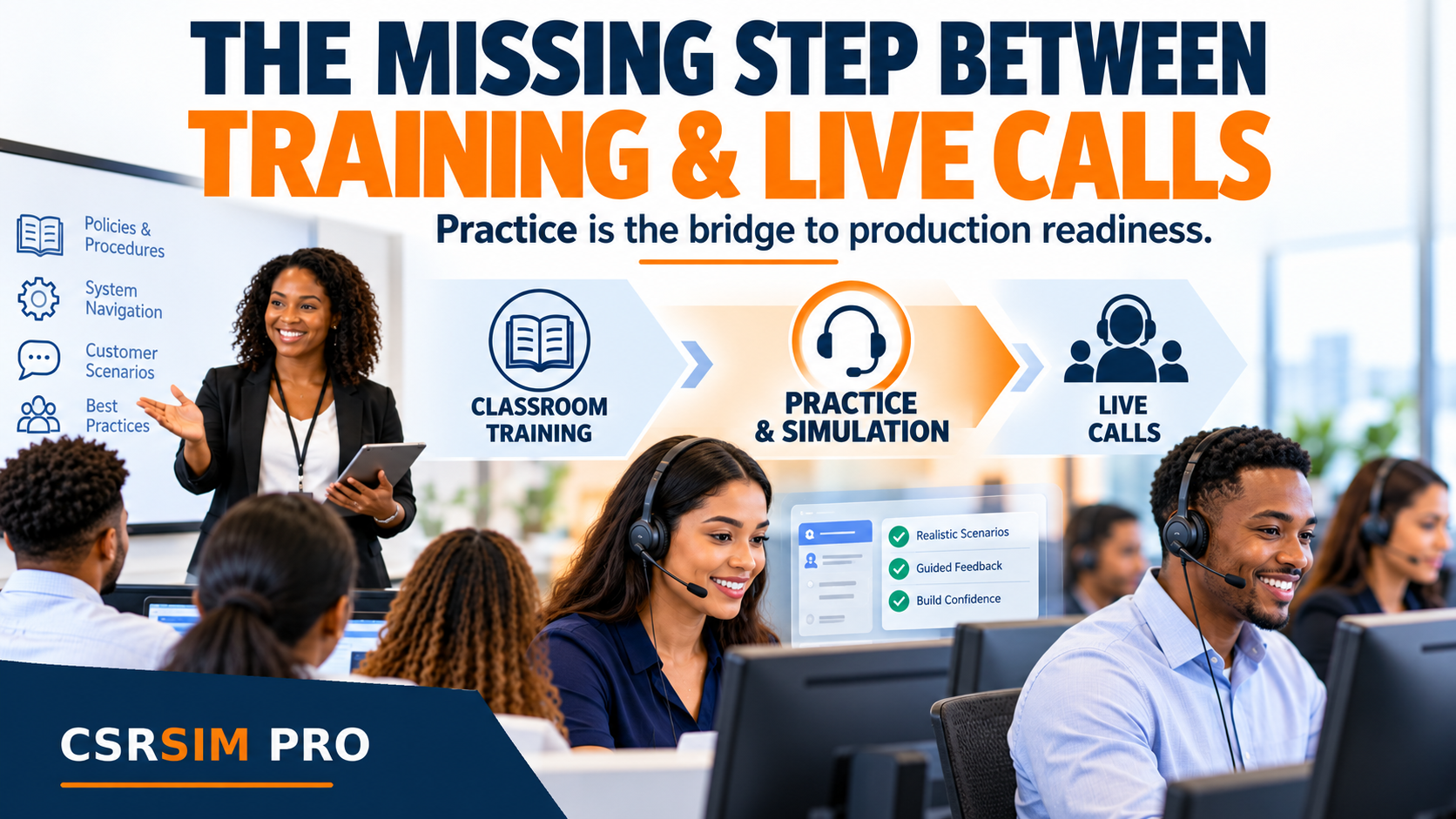
The Missing Step Between Customer Service Training and Live Calls
There’s a point in customer service training where knowing what to do is no longer enough. The trainee has learned the procedures, reviewed the scripts, completed the required modules, and passed the assessments. The next expectation is that they can apply everything while interacting with a customer. But something important may be missing between those…
-

From Classroom Training to the Live Customer Service Floor
The classroom is controlled. The production floor isn’t. During training, information is usually presented in a logical order. The instructor explains the process. Trainees follow along. Examples are often clear, and the correct answers can be found in the materials provided. Then the new agent enters production. Suddenly, the information doesn’t arrive in the same…
-

Stop Guessing If New Agents Are Ready for the Production Floor
“I think they’re ready.” It’s a statement that can sound reassuring at the end of a new-hire training class. But what exactly makes an agent ready? Is it attendance? Passing scores? Completing the LMS curriculum? A successful role-play conversation? Each of these can tell trainers something useful. However, none automatically confirms that the trainee can…
-

5 Signs Your New Customer Service Agents Aren’t Ready for Live Calls
Your trainees are passing their quizzes. Attendance is great. Everyone seems comfortable with the material. So why do some of those same agents struggle once they begin taking live customer calls? The answer may have less to do with what they know and more to do with how well they can apply it. Classroom performance…
-

How to Prepare New Customer Service Agents for Go-Live
Your new agents completed the training. They passed the assessments. They know the policies. But what happens when they receive their first live customer call? Can they locate the correct account while listening to the customer? Can they research an unfamiliar request without relying on their supervisor? Can they follow the correct procedures, complete the…